



By Zhang Mengxu, People’s Daily
A recent video titled “China Quietly Saved the World Last Month,” published by former New York Times columnist Max Fisher, has resonated widely on international social media.
In the video, Fisher points to a map of global tanker routes and notes that the most striking development is not which countries are rushing to buy oil, but which are holding back. The video has been viewed more than 6 million times, with thousands of comments describing China’s response as “clear-headed” and “prudent.”
The Strait of Hormuz, a critical chokepoint for global energy transportation, has faced sustained pressure in recent weeks, driving up the risk premium on international crude oil.
Under conventional market logic, when geopolitical tensions heighten supply concerns, major consuming countries tend to accelerate purchases and build inventories. A widening supply-demand gap then pushes oil prices higher, with rising energy costs contributing to global inflation.
Following the latest escalation of tensions in the Middle East, fears mounted that a rebound in energy prices could undermine the global economic recovery. Expectations of a race to secure oil supplies briefly swept through commodity markets.
China’s market, however, has offered a different response. Domestic refiners adjusted their production schedules in line with market conditions, slowing new purchases of high-priced crude in an orderly and flexible manner and thereby easing the pace of import growth from the demand side.
In a remarkably measured approach, China effectively acted as a “buffer” for strained global supply and demand. The Wall Street Journal noted that China’s reduced oil imports have provided important support for an already pressured global economy. France’s Le Figaro said this marked the second time since the 2008 global financial crisis that China played a key role in supporting global economic stability.
For years, efforts to cope with oil crises have focused primarily on the supply side, leaving major consuming countries vulnerable to price volatility. This latest experience, however, shows that a huge consumer market can also serve as a buffer by adjusting production capacity and managing inventories, becoming an important force in maintaining market balance.
Reuters reported that China’s reduced crude purchases since the escalation of tensions in the Middle East have, to a considerable extent, offset the impact of supply disruptions. The Financial Times likewise commented that China is becoming a key variable influencing the balance of the global oil market.
What enabled China to take a different path? The answer lies in strategic foresight.
During previous periods of prolonged low international oil prices, China steadily advanced its commercial inventory system, gradually building substantial reserves.
Wind and solar facilities operate in synergy in the desert southwest of Yumen township, Yumen, northwest China’s Gansu province. (Photo/Su Rong)
As oil prices rose in the current cycle, the domestic market slowed its usual pace of adding to commercial inventories, drawing on stocks accumulated earlier to replace some high-priced imports.
This approach ensured the basic operational needs of domestic refineries while avoiding further tightening of supply and demand through competition for oil at elevated prices.
Sufficient reserves provides a direct foundation for China to adjust the pace of its imports with flexibility.
Through years of sustained effort, China has developed an efficient system for the turnover of commercial inventories and has continued to diversify its sources of crude oil imports, including from countries and regions such as Brazil and Africa. This has reduced its reliance on any single transportation route.
More importantly, its market-oriented refining and petrochemical sector has become increasingly mature, enabling companies to respond quickly to price and risk signals and adjust procurement and production plans accordingly.
This diversified and resilient energy supply system gives China greater room to maneuver when geopolitical disruptions occur.
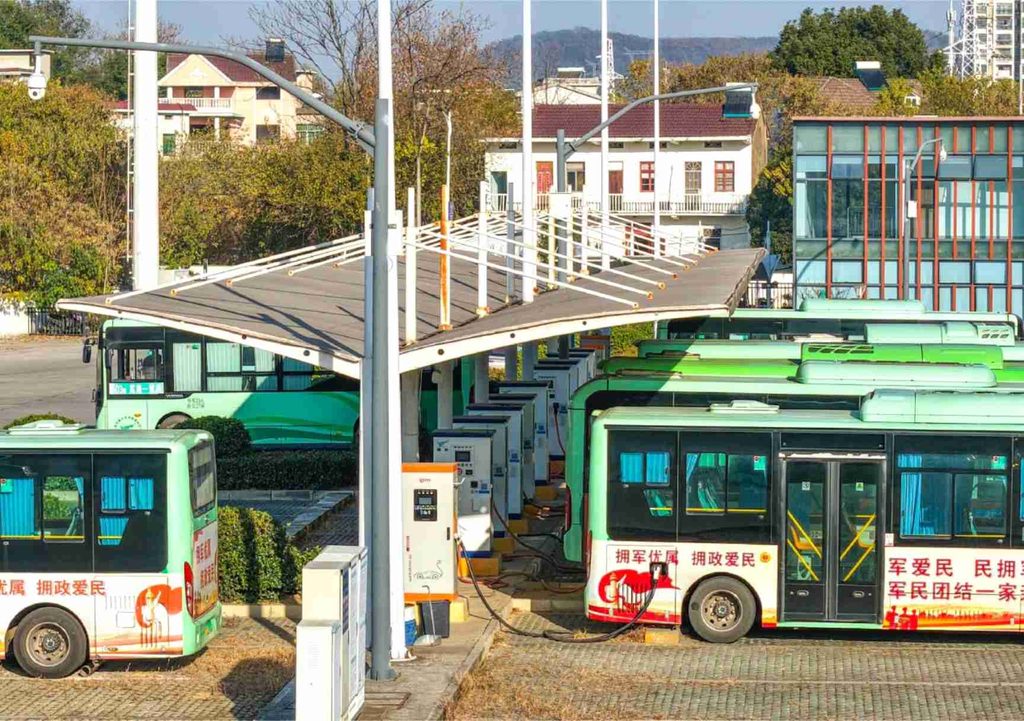
From a longer-term perspective, what is truly reshaping the logic of energy is the green transition now advancing in greater depth. According to the International Energy Agency, electric vehicles alone helped China displace the equivalent of 1.5 million barrels of crude oil per day in the second quarter of this year, far exceeding the market’s previous expectations. China’s rapid development of new energy is not only reshaping its own energy mix, but also quietly changing the underlying dynamics of the global energy market.
China has evolved from a passive recipient of global energy price fluctuations into a more proactive stabilizing force in the global market. Behind this transformation lies a consistent and prudent approach to energy development: keeping China’s energy supply firmly in its own hands and using the certainty of its own development to cope with uncertainties in the external environment.
That, in itself, is one of the most concrete and lasting contributions China can make to global market stability.